If you’ve ever pored over glossy images of smart, newly done-up interiors, you have no doubt spotted spaces with what appear to be vintage, warm and slightly worn wood floors running throughout them. You may have wondered how the folks who inhabit these environs managed to inherit such a genuine, old-wood flooring surface. The truth is, there is every chance that what you are admiring is not what it appears, and it is not antique at all. It's quite likely that this floor is actually a clever creation known as a distressed & aged wood floor. But is it old, you ask, or is it new?
The answer can be either. Some aged floors are made from genuinely reclaimed oak with a real past. Most are new oak, worked by hand and machine until it looks and feels as if it has been walked on for decades. This guide explains the difference and the different ways we achieve it.
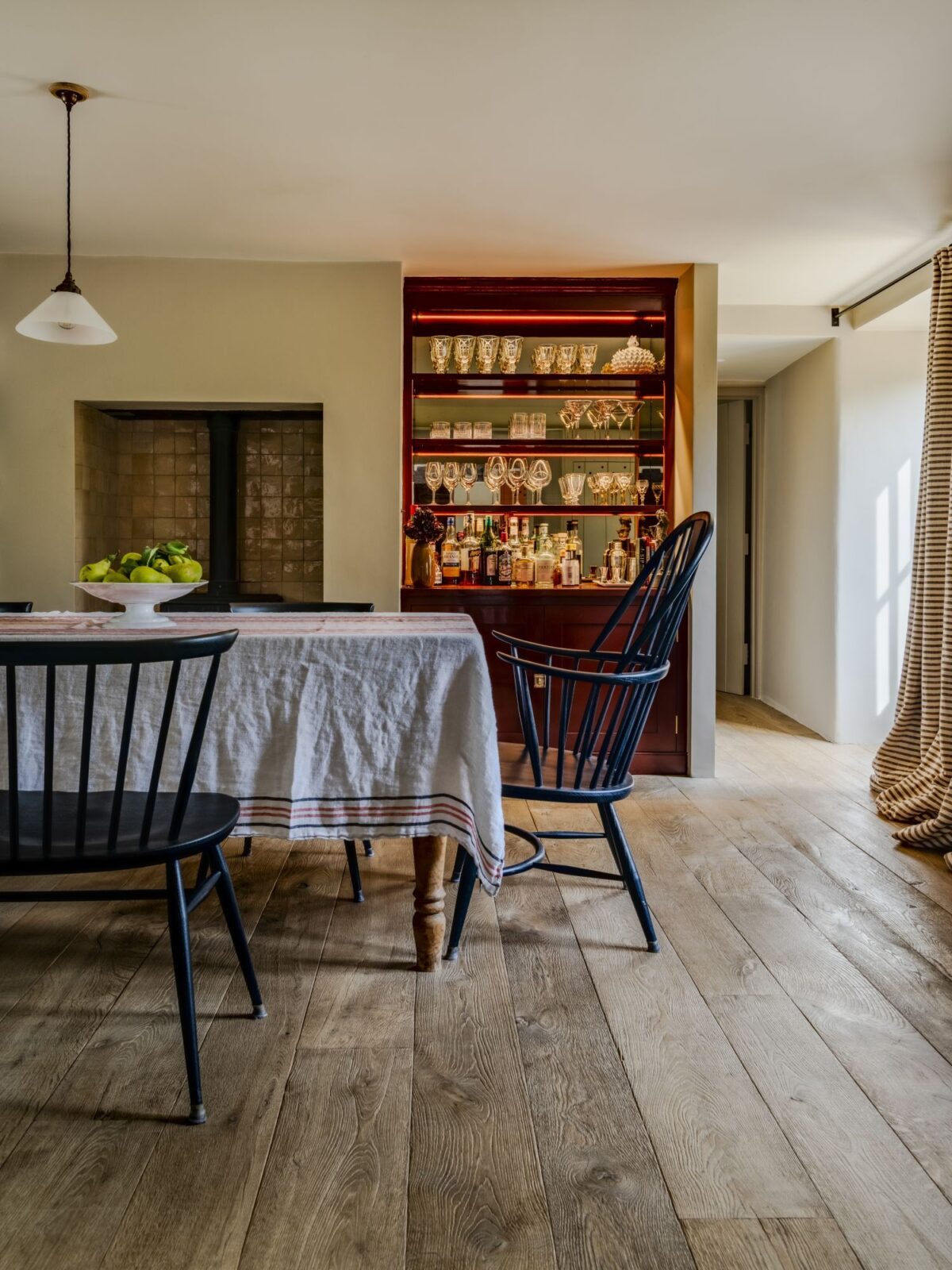
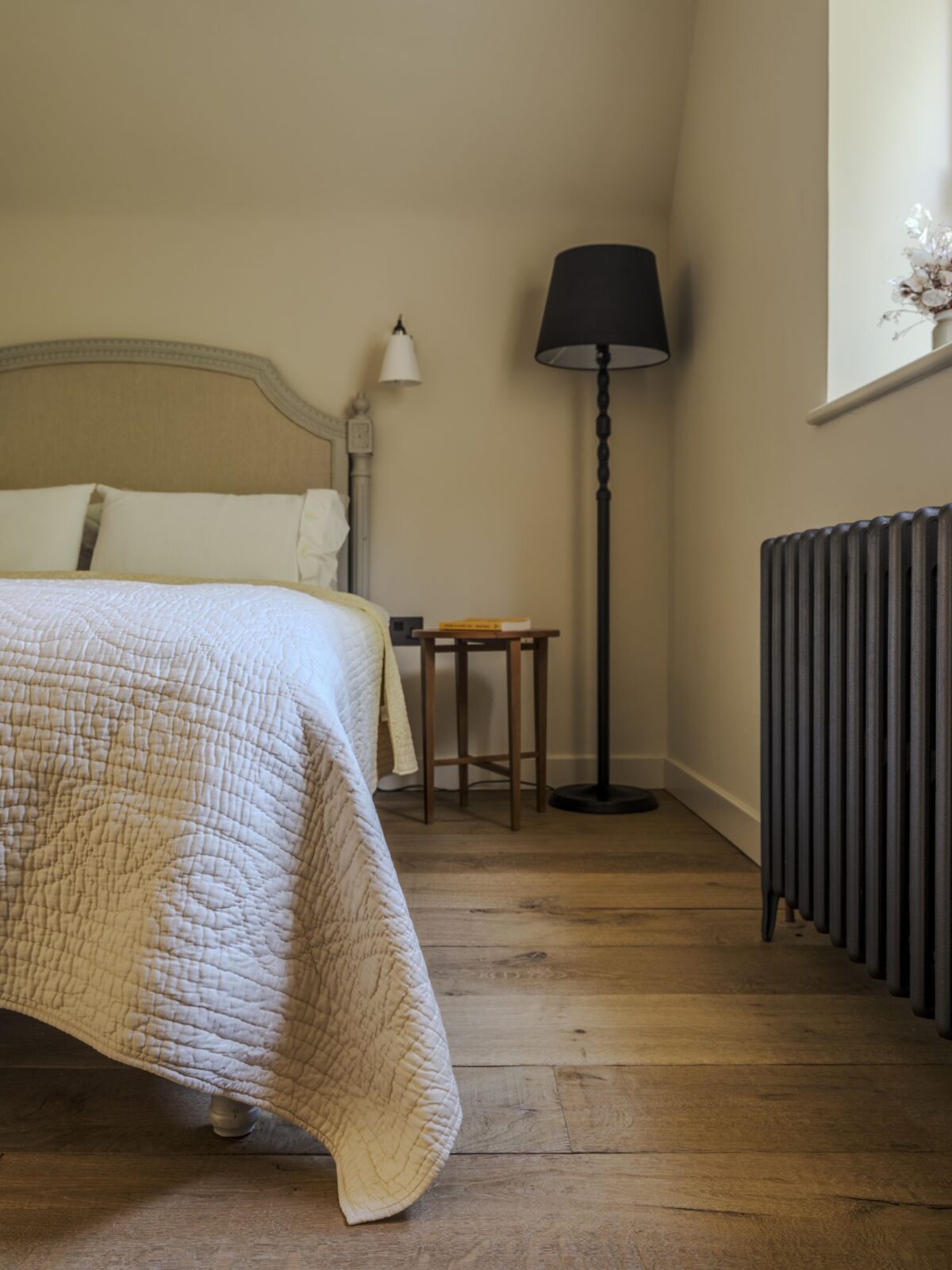
What is aged and distressed wood flooring?
Aged, distressed, weathered and reclaimed are often used interchangeably, but each describes something different.
- Aged describes the overall effect: texture, tone and wear combined to suggest a floor with a past. Most aged floors are newly made, though some use genuinely reclaimed timber.
- Distressed refers to the specific techniques used to add signs of wear, such as hand-worked edges and surface marks.
- Weathered describes timber that appears to have been shaped by the elements. Sun, rain and wind alter the colour and surface of wood over time, often leaving bleached or faded tones and a softened texture.
- Reclaimed refers to where the timber came from. Reclaimed oak has been recovered from an earlier building, structure or other source and given a new life as flooring. It carries a history and patina that no finishing process can reproduce.
How new oak is aged and distressed
The work goes into the wood itself, changing its texture, edges and tone, so the effect comes from the timber and not from a coloured coating. At Solid Floor, several techniques are used, often in combination:
- Brushing removes the softer growth rings so the harder grain stands proud, leaving a tactile, textured surface.
- Tumbling wears the boards evenly, adding the small dents and marks that decades of footsteps would leave. On our floors, it is combined with hand-scraped edges, a finish we call 'tumbled with hand-scraped edges'.
- Smoking and tannin treatments deepen and vary the colour. Read more in our guide to smoked and fumed oak.
- Broken edges, open knots, cracks and an undulating surface give a more pronounced sense of age on some floors.
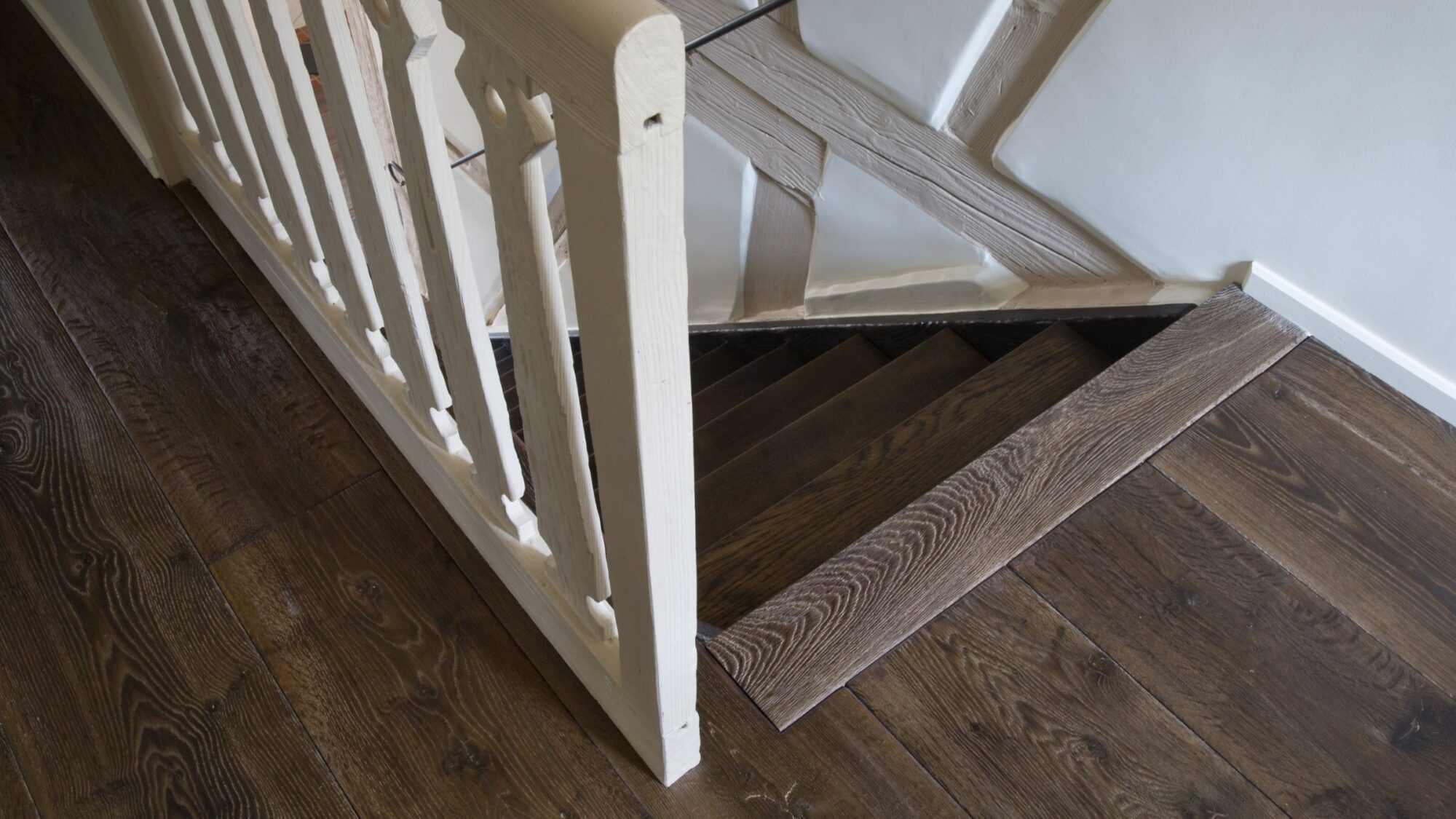
What does an aged floor bring to an interior?
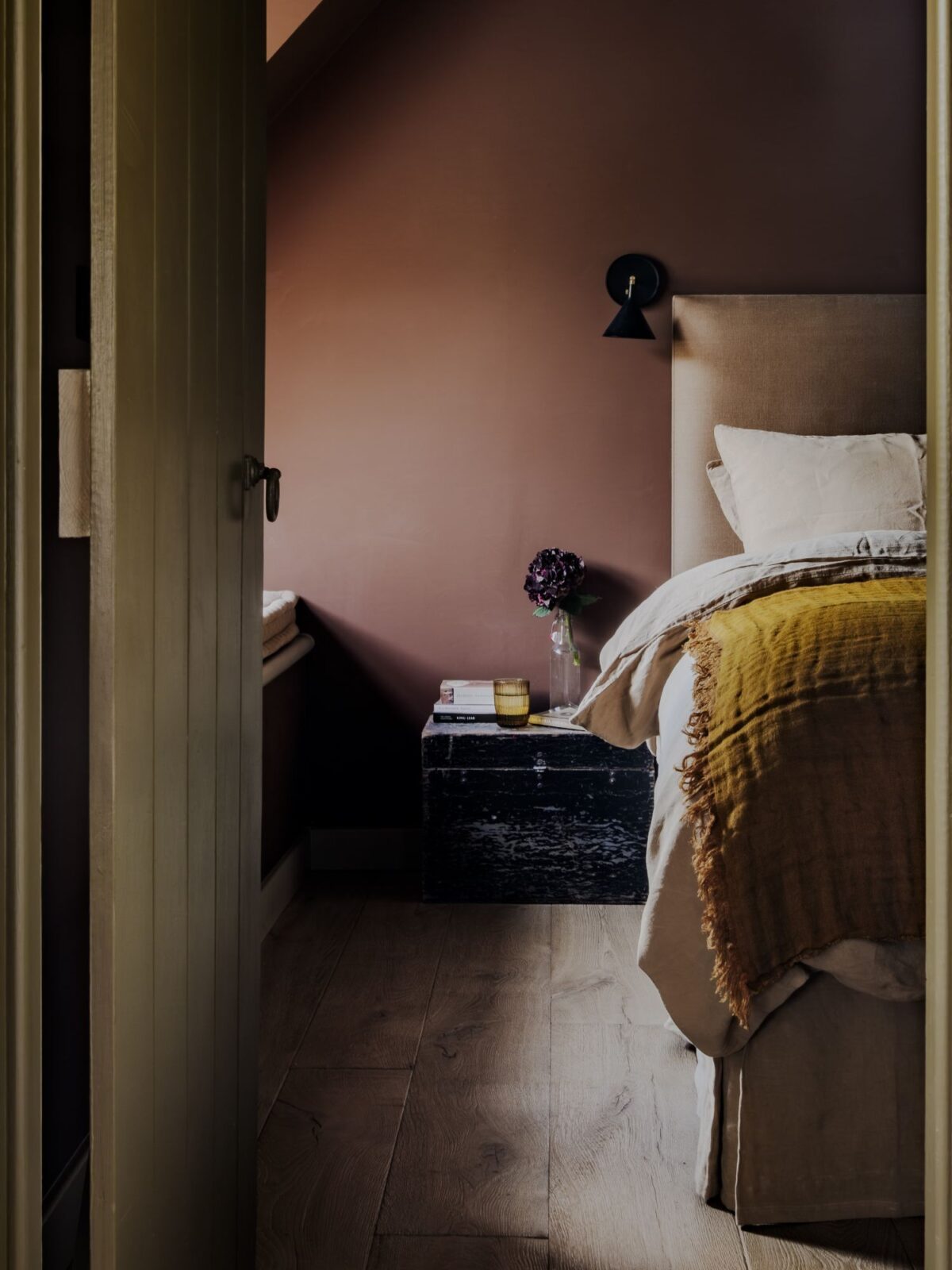
An aged floor gives a room depth and a sense of permanence from the day it is laid. Because its surface varies from board to board, it adds another layer to the material palette and stops a large expanse of oak from looking uniform.
In a period property, it supports the history already present in the building, giving the impression that the floor is an original or vintage feature that has been lovingly retained. It blends in, adding to the overall sense of age.
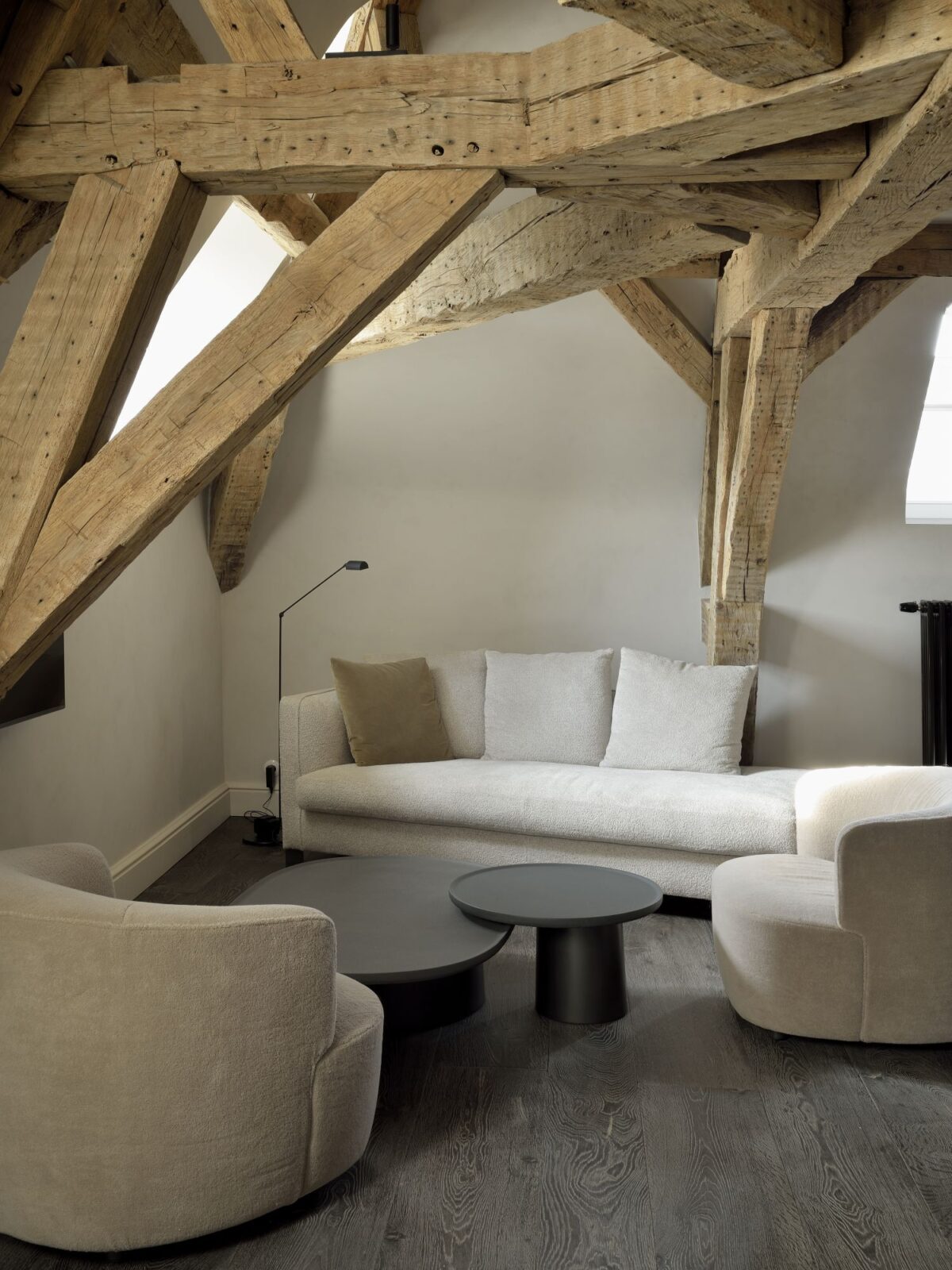
In a new build or a clean-lined contemporary scheme, aged flooring brings warmth and makes the space feel settled from the start. It adds texture to spaces that can sometimes find themselves dominated by smooth finishes. More crucially, they add contrast, suggesting that the designer has purposely juxtaposed something old and unique with the modern - for sheer drama and effect.
Aged oak is at its best alongside other natural materials. Stone, plaster, linen, wool and leather each carry their own irregularities, and an aged floor sits comfortably among them, becoming part of the architecture of a room as much as its decoration.
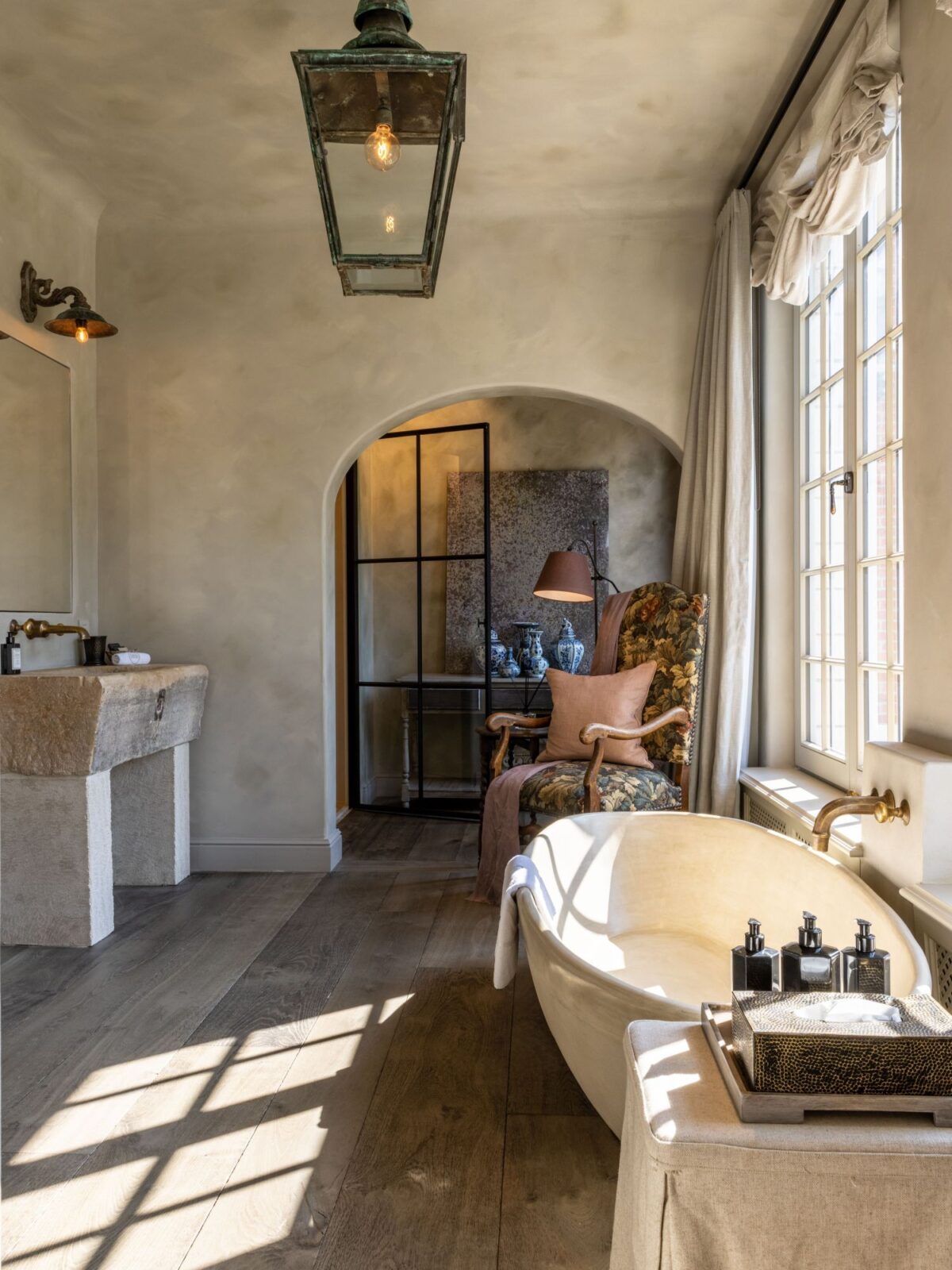
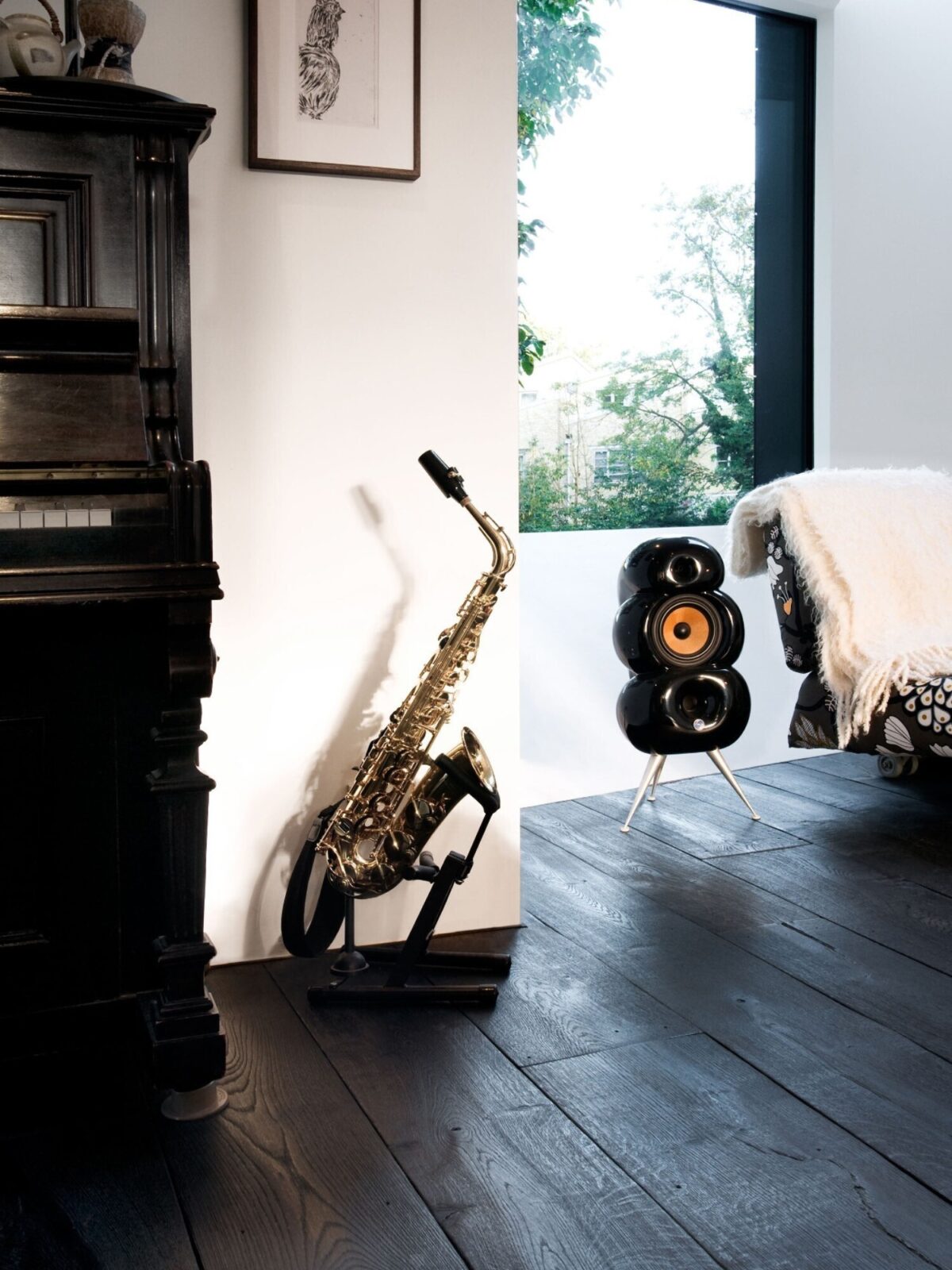
Rustic grade timber & ageing
Ageing works best on rustic grade timber.
Its knots, grain and the natural differences between boards combine with the marks added during ageing, giving the floor enough variation to hold interest across a whole room. Read more in our guide to timber grading.
Mixed widths take this a step further.
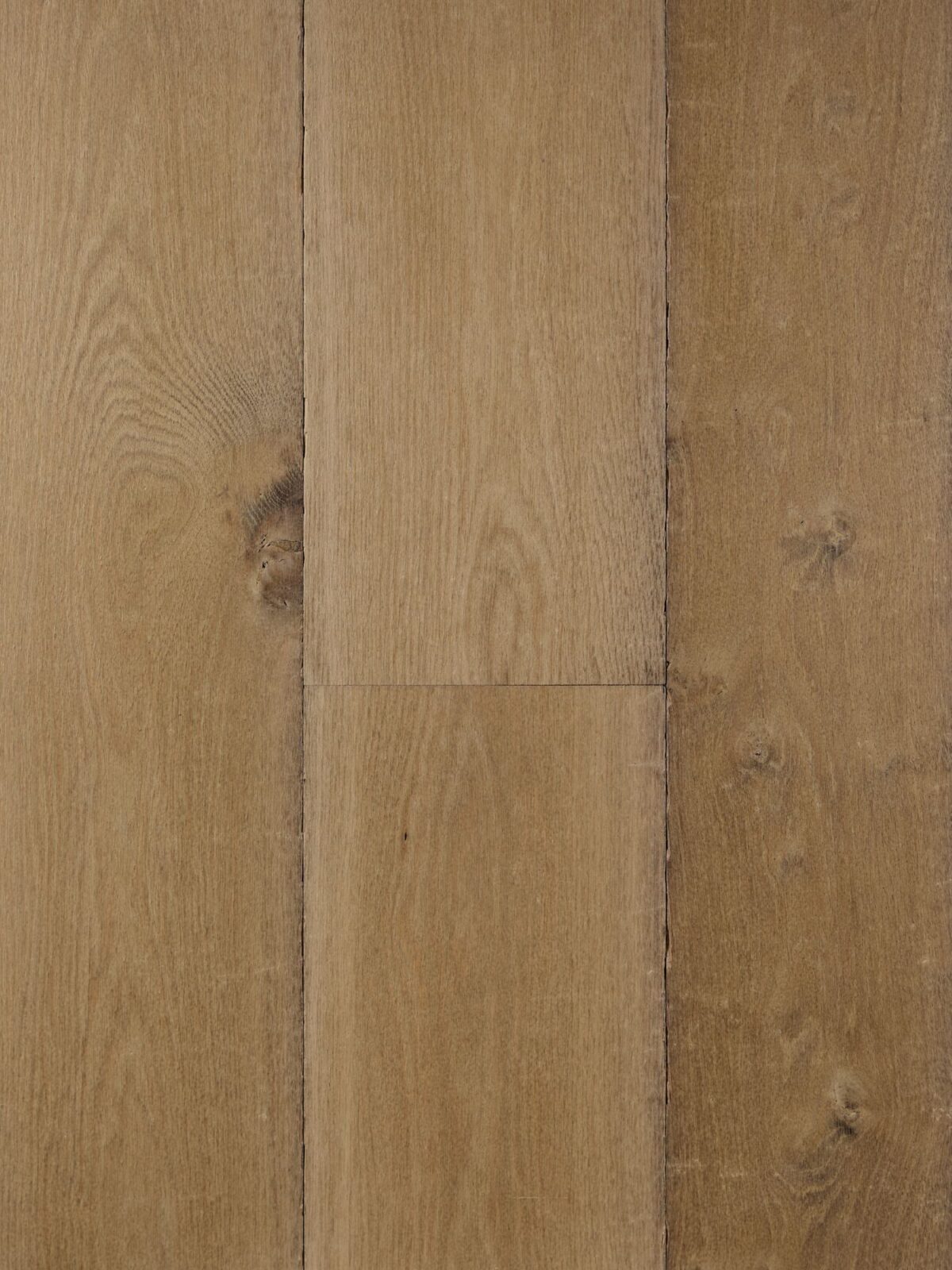
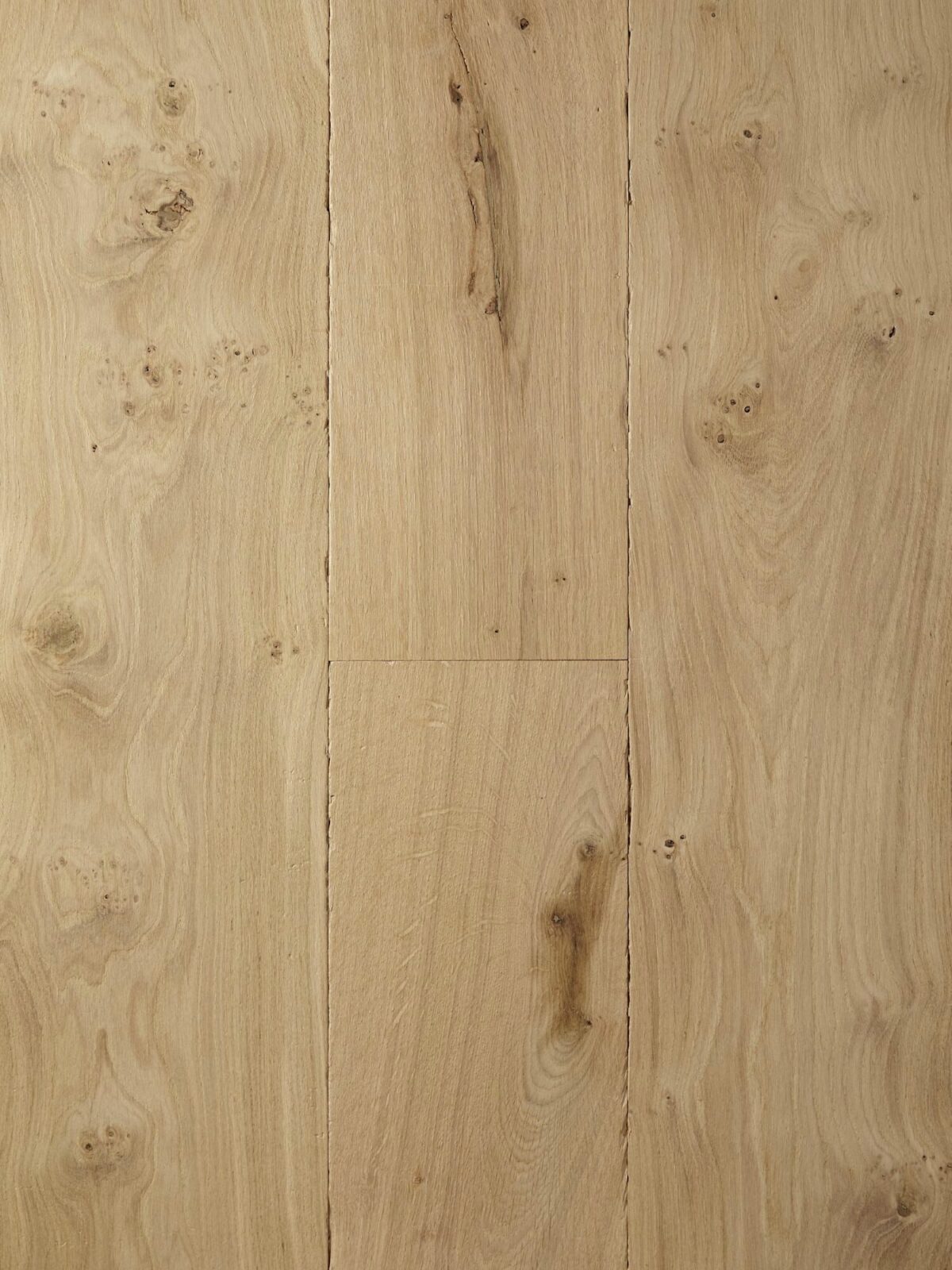
Why mixed widths suit an aged floor
Mixed-width flooring has its roots in the way timber floors were made before industrialisation.
Unless a floor was being made for a particularly wealthy household, there was little reason to cut every board to the same width. A tree was valuable, and as much of it as possible was used, so traditional floors were often laid with boards of different widths that reflected the natural dimensions of the log.
That history makes mixed widths a natural partner for aged timber. Varying board widths work with the irregular surface to set an informal rhythm across the room. There is no regular grid, and the variation feels as if it belongs to the material. In a contemporary interior, this can also loosen a more controlled architectural scheme.
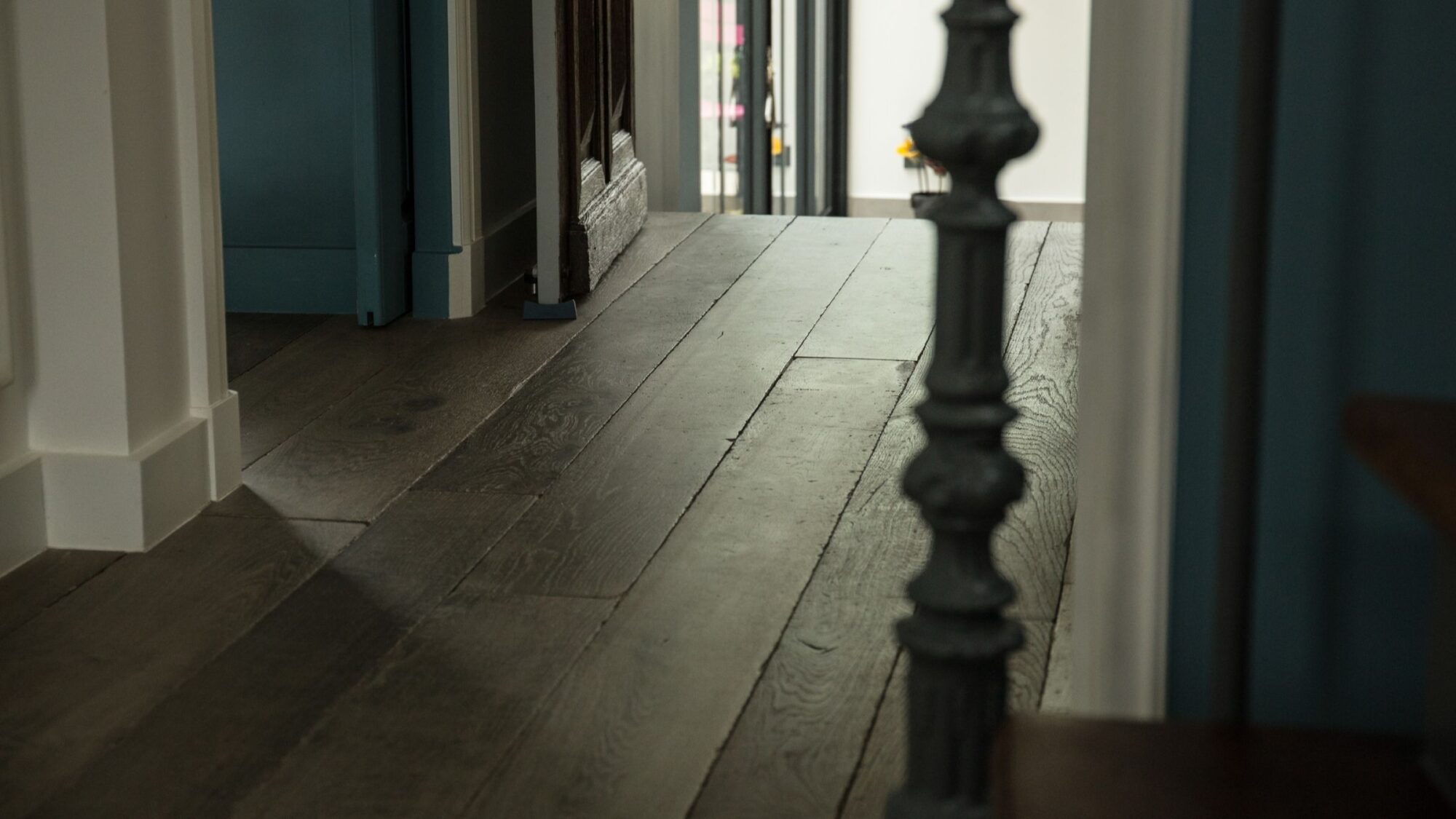
Our four approaches to aged timber
1. Genuine reclaimed oak: Abbey
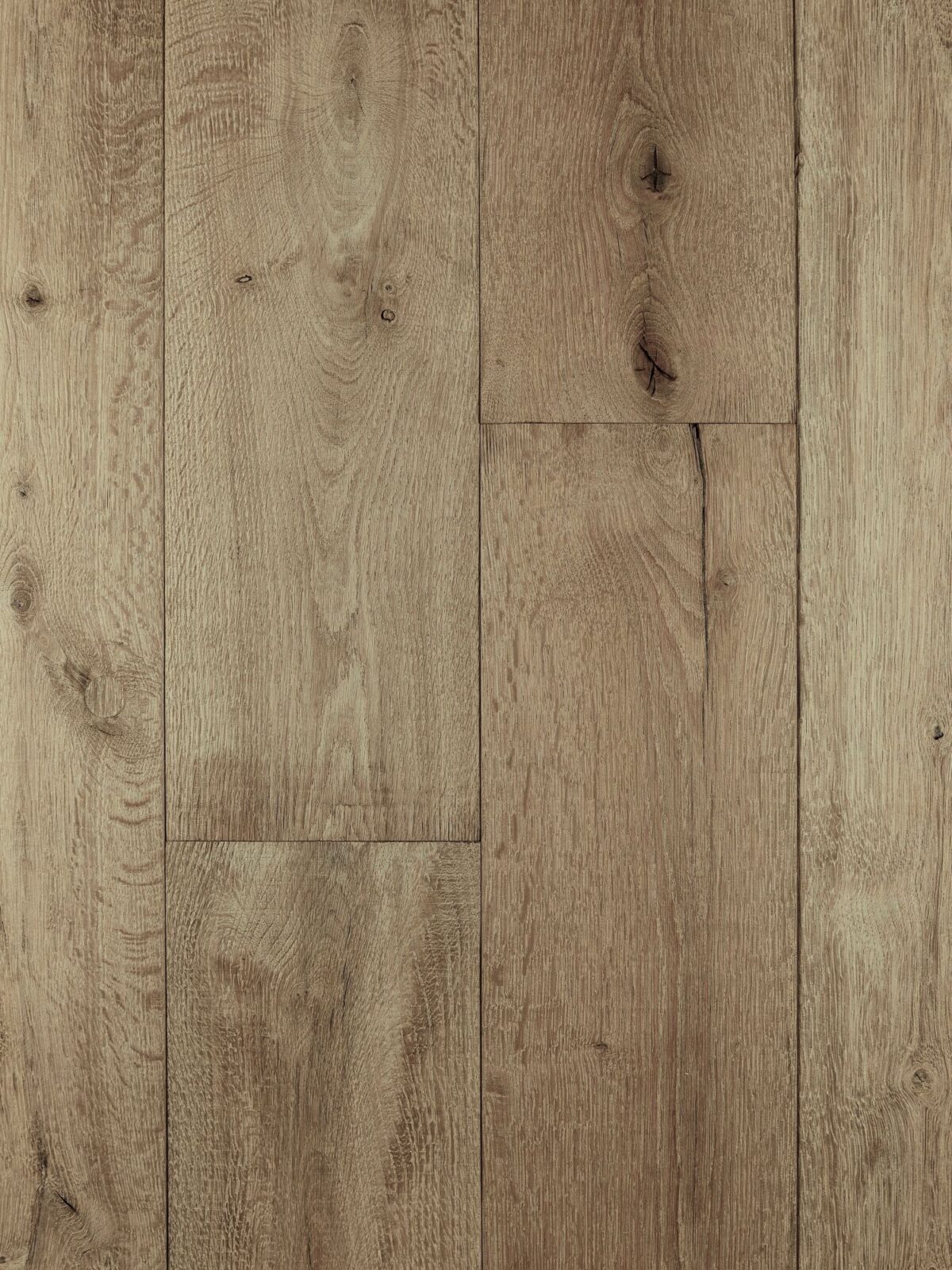
The Abbey range uses genuine reclaimed oak, salvaged from old railway wagons, as the top layer of an engineered board.
Decades of service have left their mark on the wood: shrunken knots, shakes and an undulating surface that no new board can match. The engineered construction underneath gives the stability expected of a contemporary floor, so the reclaimed top layer keeps every mark of its previous life without the movement of old solid boards.
For architects and specifiers, Abbey is also a reuse story. Oak that has already done one job is kept in use instead of being discarded, and no new tree is felled for the wear layer. And because it is used as a top layer, a limited supply of reclaimed oak covers far more floor than it would as solid boards.
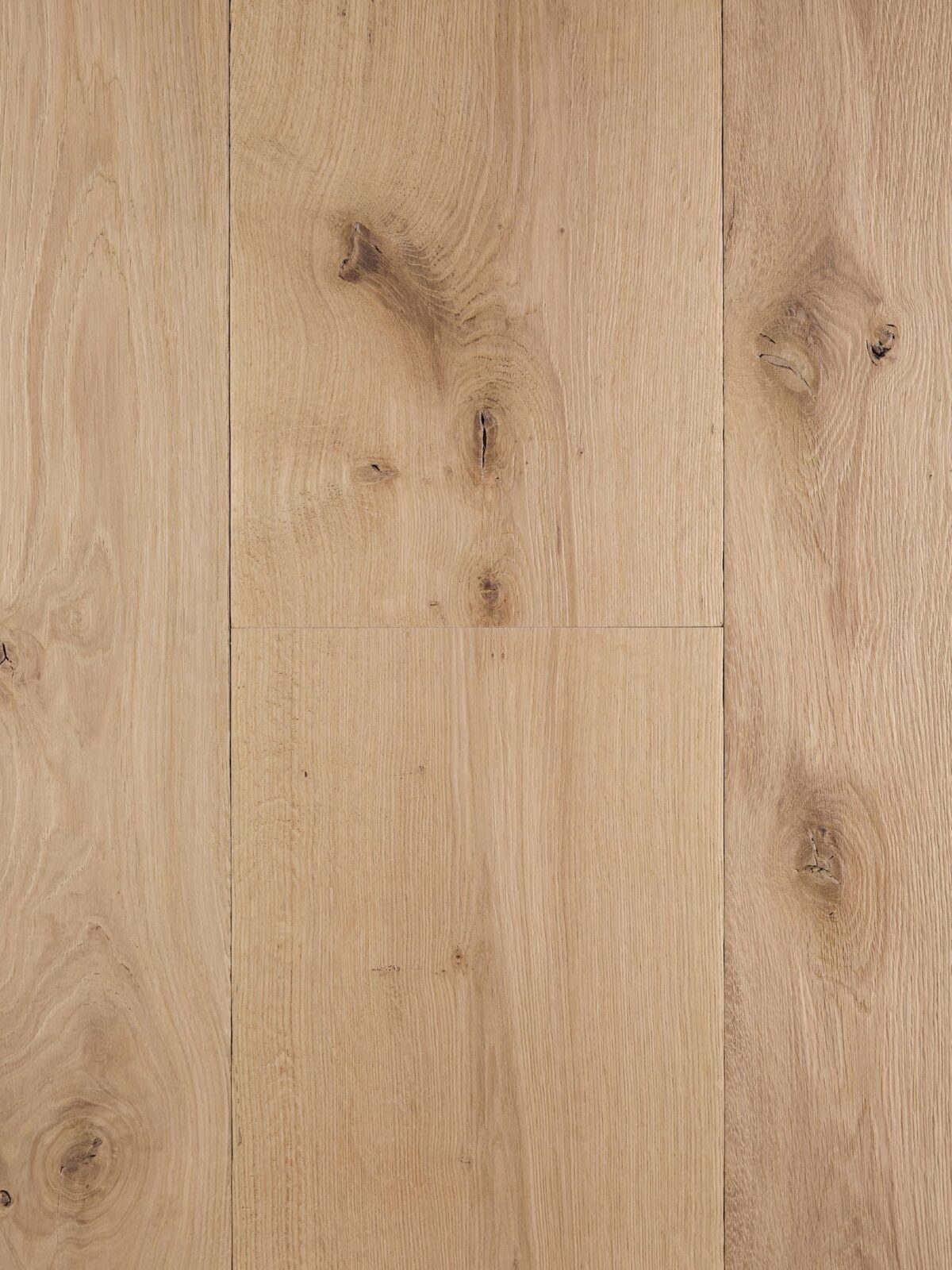
2. Surface and patina: Heritage
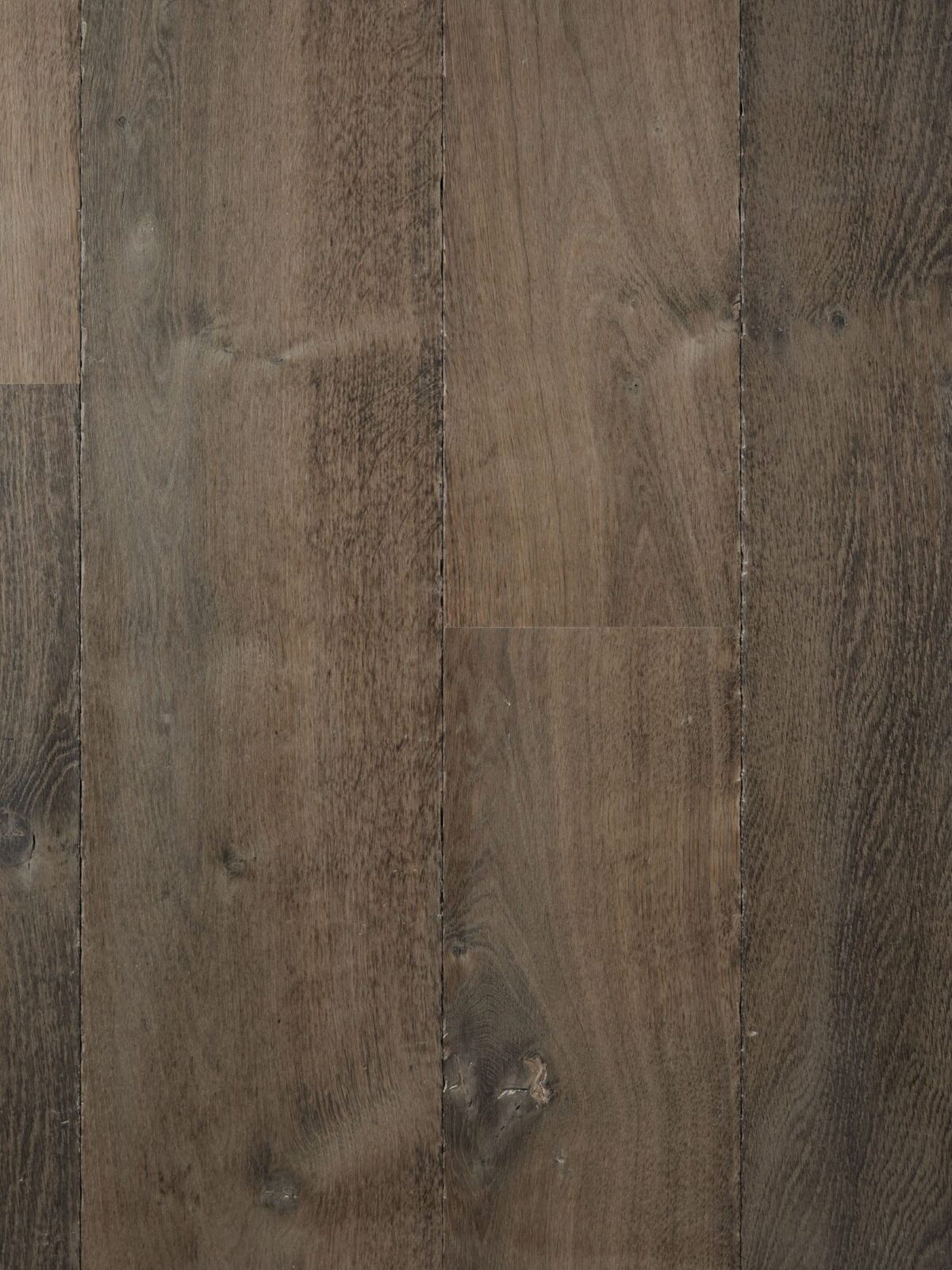
Heritage recreates the qualities of an older, well-used timber floor through a combination of surface treatments: tonal variation around knots and shakes, broken edges and carefully introduced signs of wear.
It is available as plank and parquet, so the same aged quality can be used across different architectural settings and patterns.
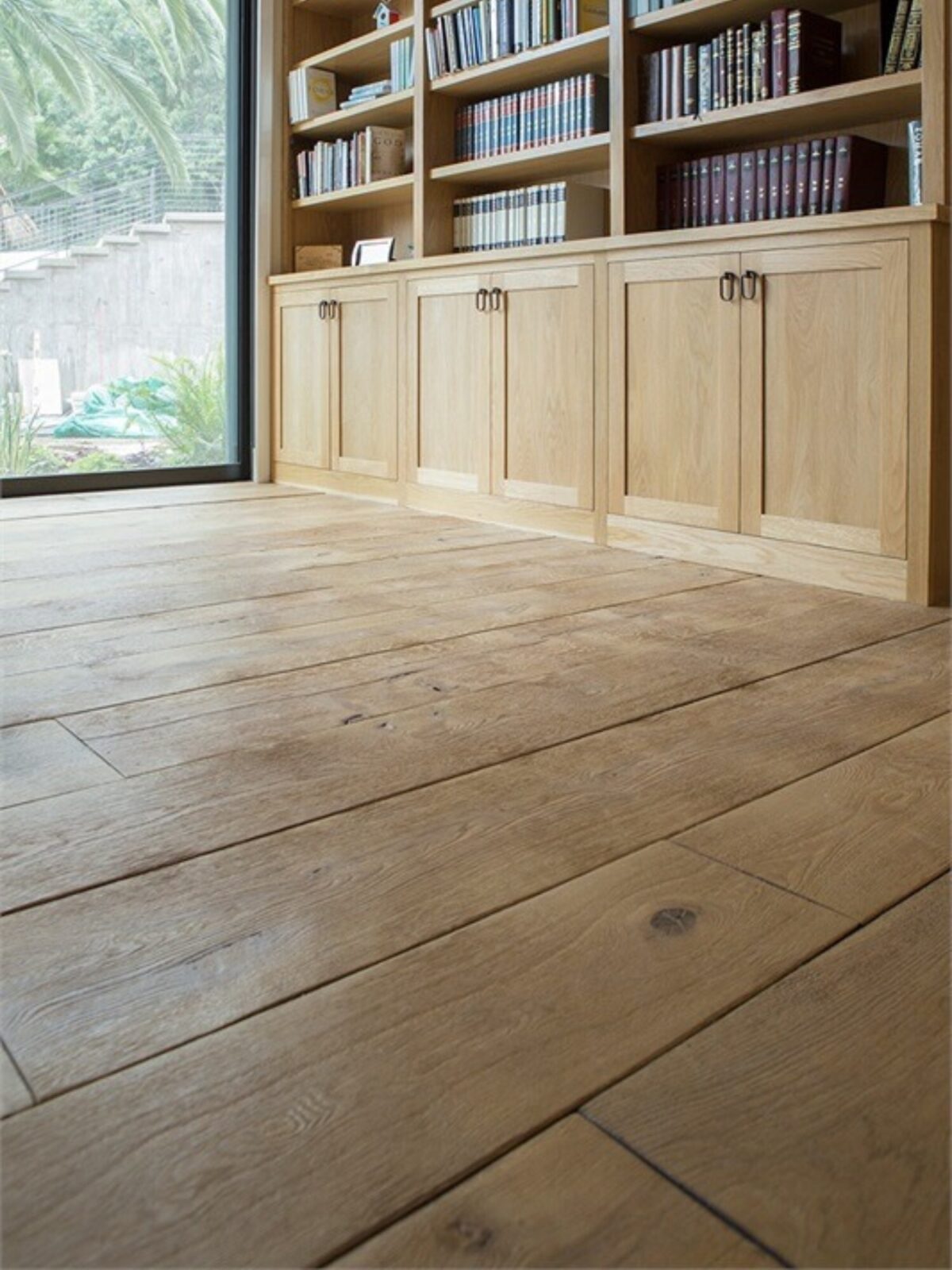
3. The look of centuries-old oak: Crown
Crown takes its cue from the century-old timber floors found in stately homes and historic interiors.
Deep wire-brushing and an undulating surface create subtle variation across the boards, while colour changes around the knots add depth. Crown is particularly effective where a new floor needs to look as if it has always belonged to the building.
4. Raw and industrial: Foundry
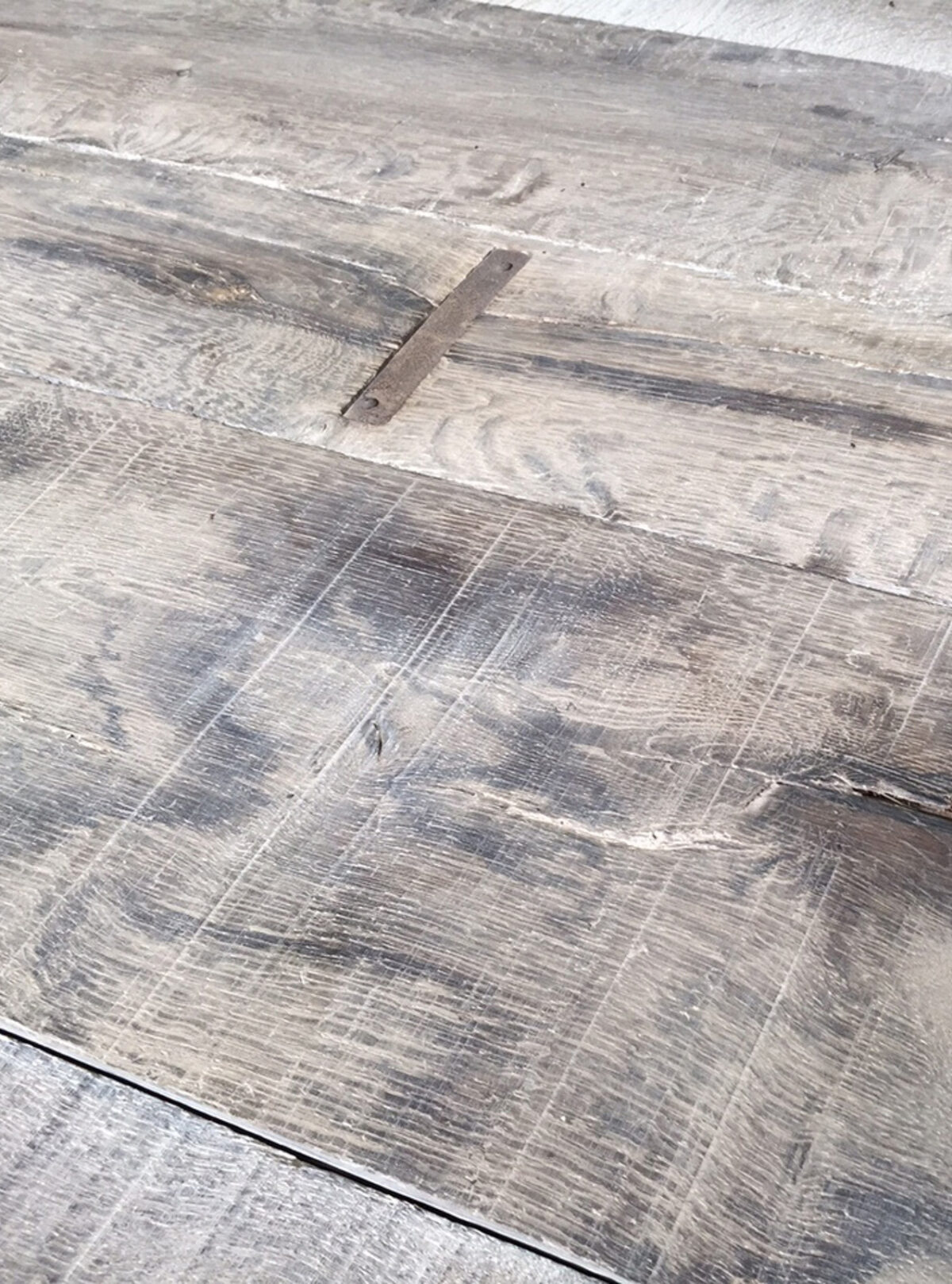
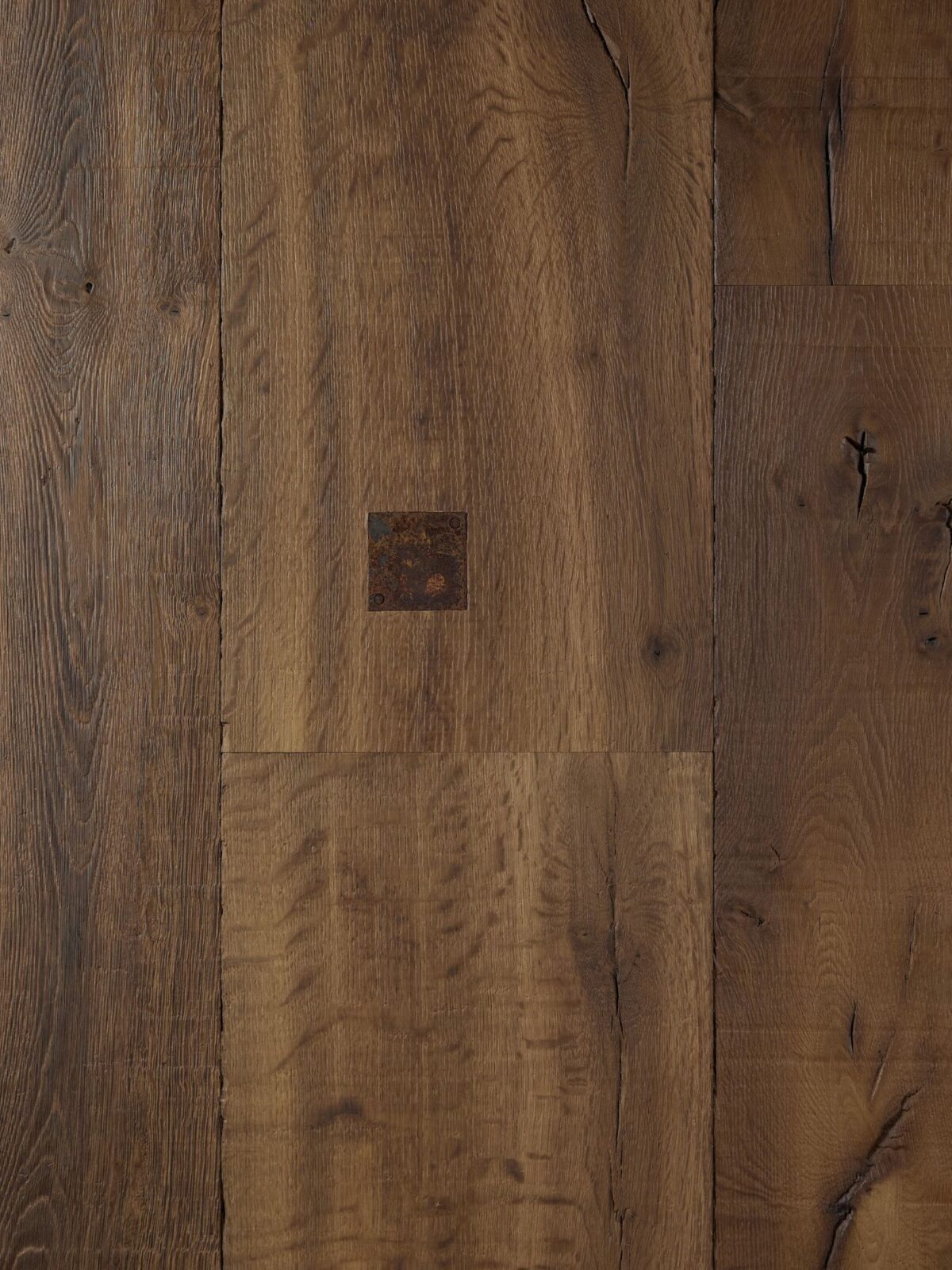
Foundry takes aged timber in a more industrial direction.
Natural heartwood, open cracks, knots, saw marks and tonal variation give the boards a raw, weathered quality. Optional metallic inserts emphasise the workshop feel for a more dramatic take on aged oak.
How the ranges compare on price
As a guide, our optional finish for Landmark and Strata floors, tumbled with hand-scraped edges, is the most accessible way to introduce age, giving the timber a soft, worn-in look. Of the dedicated aged ranges, Heritage is the starting point, while Crown and Foundry sit at the higher end of our collection. Abbey spans both: some floors sit in the mid-range, while others sit at the top, depending on the finish.
Our team can give you a quote for your project, and samples of each range are available to order online or to see at our showrooms.
Aged floors and underfloor heating
Abbey is engineered, with its reclaimed oak top layer bonded to a stable, cross-layered base. Heritage, Crown and Foundry are available in either engineered or solid construction.
Over underfloor heating, engineered boards are the most stable choice, and the one we generally recommend. Solid boards respond more to the heating cycle: they shrink slightly as the floor warms and dries, and expand again as it cools and absorbs moisture, so small gaps can open and close between boards over the seasons.
On an aged floor, that movement is less of a concern than it would be on a smooth, uniform one. Heritage, Crown and Foundry already have cracks and open knots. On top of this, Crown has variations in height with its gentle undulating finish. The seasonal movement of a solid board blends into that. Some clients see it as part of the charm of the floor. Choosing solid over underfloor heating is a personal decision, and our team can talk you through what to expect before you decide.
Read more in our guide to using engineered timber flooring with underfloor heating.
Living with an aged floor
How does an aged surface handles wear?
One of the most practical upsides to choosing an aged floor is how well it hides everyday use. Scuffs, small dents and the marks left by grit and furniture are easy to spot on a smooth, uniform board; on an aged surface they blend into the existing texture. This is why aged oak works so well in hallways, kitchens and commercial spaces. New marks add to the floor instead of spoiling it.
Barefoot comfort: will hand-scraped edges give me splinters?
It is one of the questions we are asked most often. Hand-scraping shapes and softens the edge of the board, and the edge is smoothed before finishing. Our aged floors are finished before they leave the factory and the oil seals the surface fibres, so the floor feels smooth underfoot, with a gentle undulation you notice more with bare feet than in shoes.
As with any natural timber floor, a stray fibre can occasionally lift at a crack or knot, usually in the first months as the floor settles in. A light rub with fine sandpaper and a touch of oil is all it needs.
Choosing the right degree of ageing
Not every interior needs a heavily weathered floor. For some projects, a gentler treatment is enough to bring warmth and stop the timber from feeling too uniform. Here, a Strata or Landmark floor, tumbled with hand-scraped edges, may be the right choice: the finish is available on any floor in both collections and adds subtle texture while keeping the qualities of each. Read more in Tumbled flooring: what is it?
For a stronger sense of history, Abbey, Heritage, Crown and Foundry each offer a different interpretation of aged timber.
The right choice depends on the architecture, the scale of the room and the wider material palette. Board format matters too: wide planks create a quieter, more expansive surface, while mixed widths set a more informal rhythm.
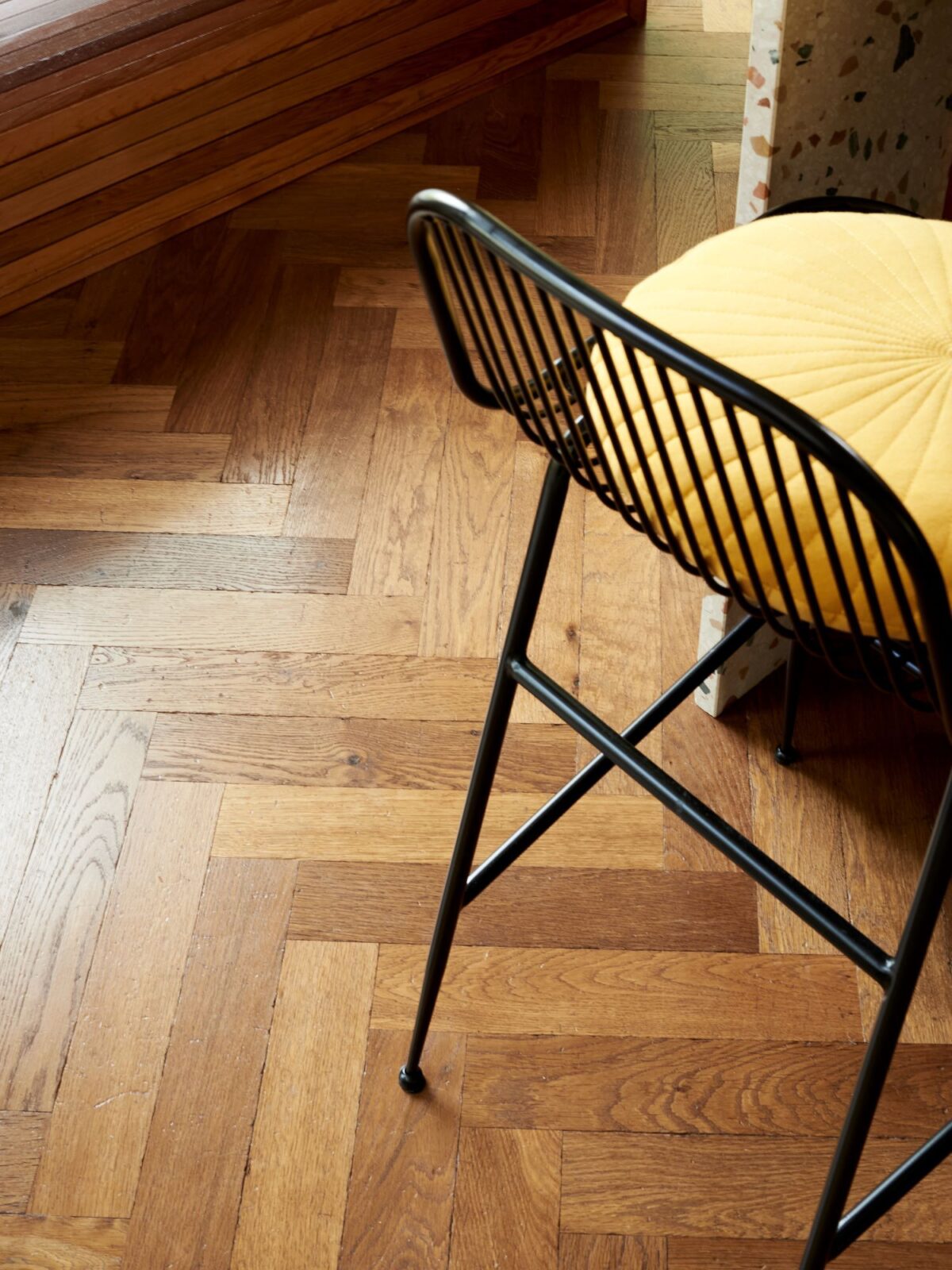
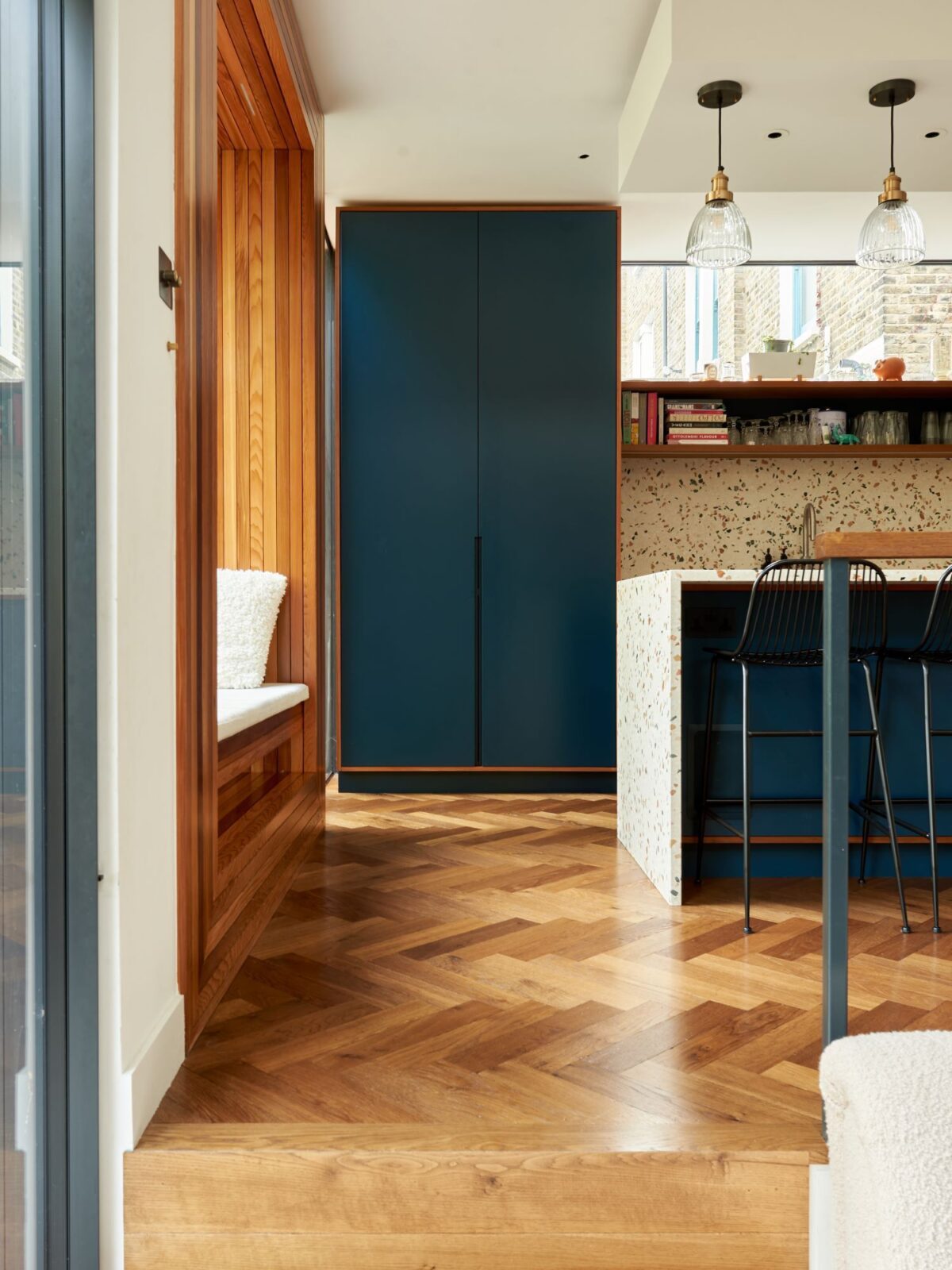
Why our Versailles panels are tumbled with hand-scraped edges
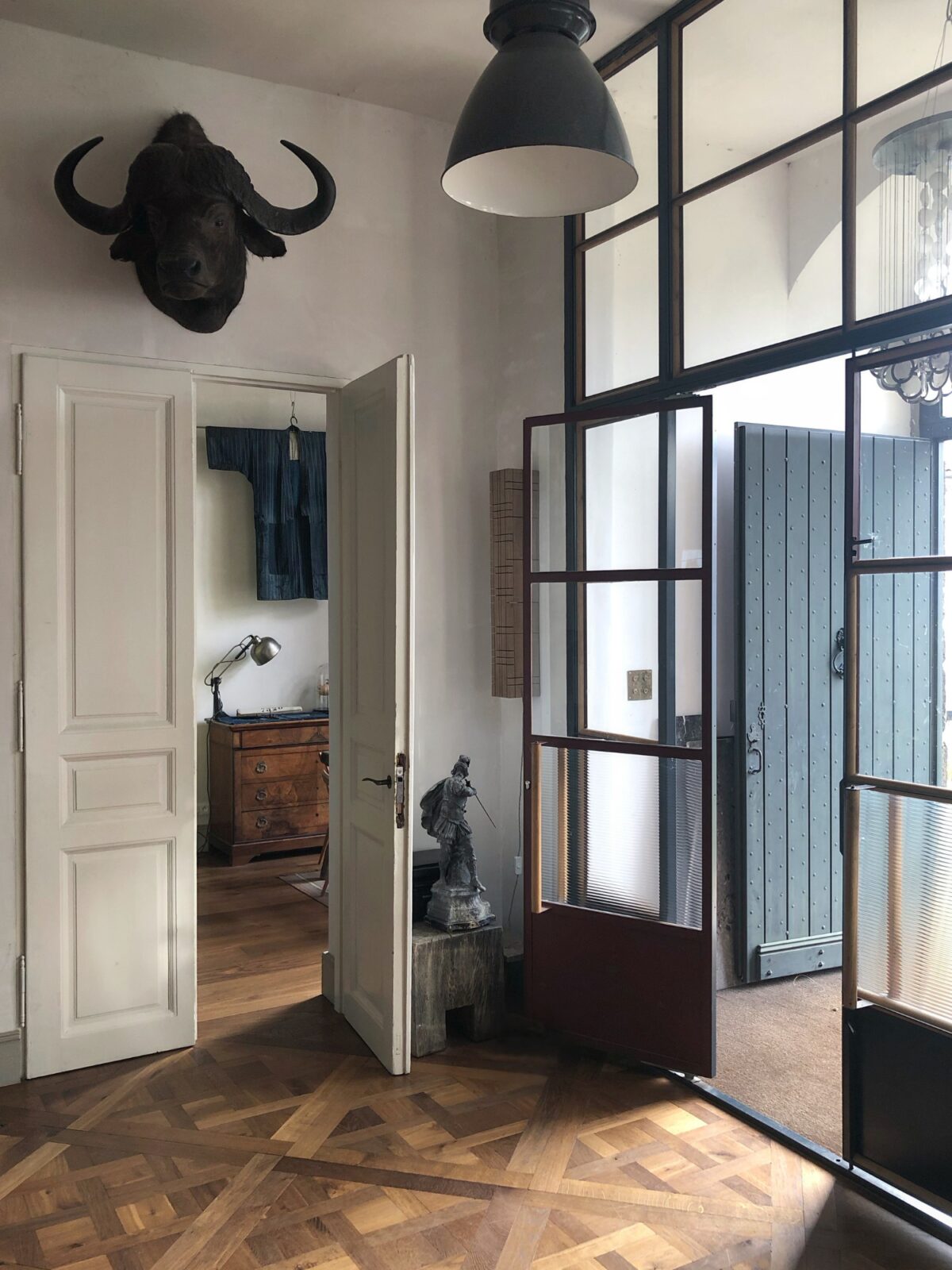
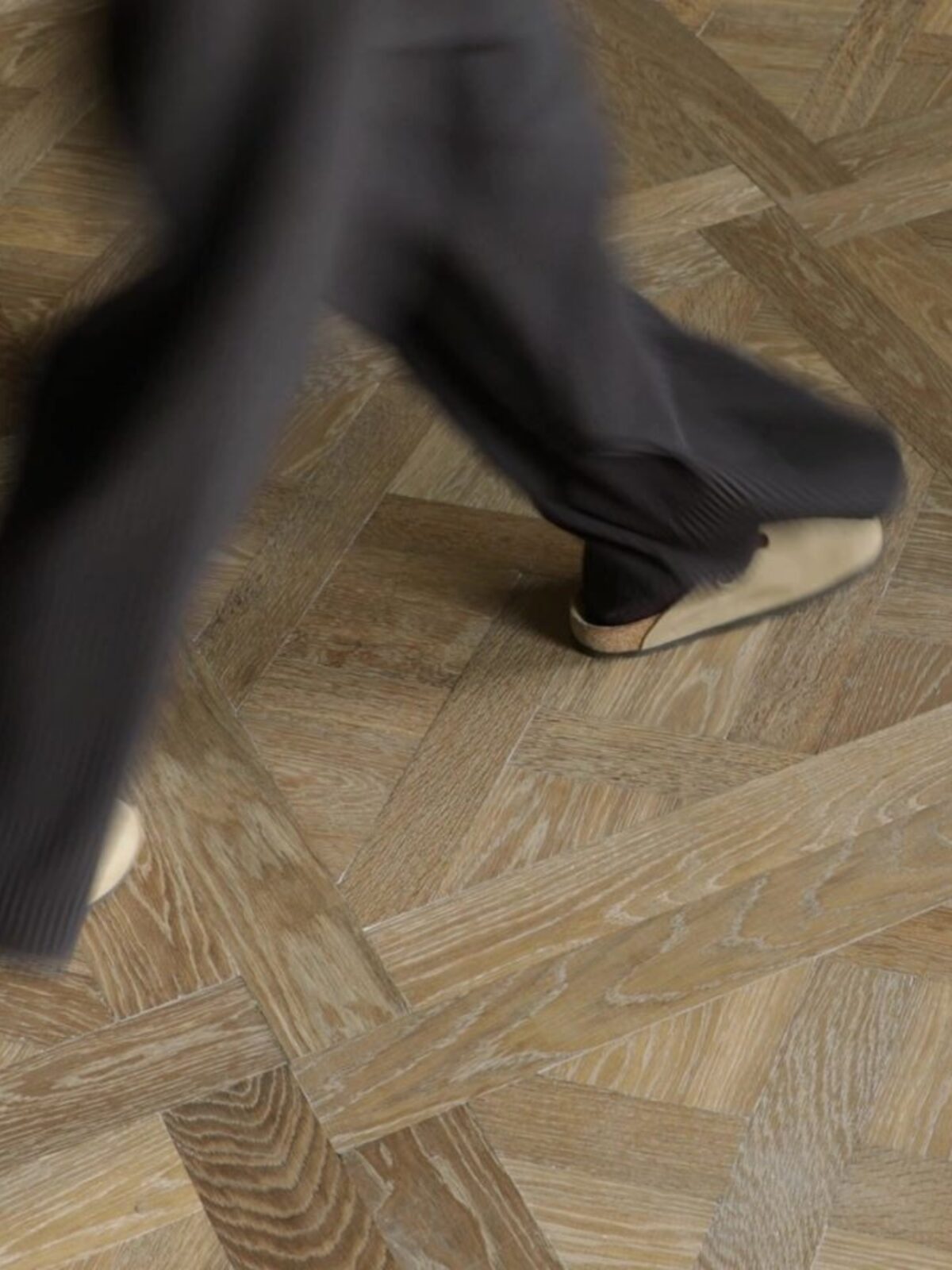
Aged timber is particularly effective in a formal parquet pattern, where the finish gives the historic pattern an authentic feel and keeps it from looking overly precise or newly manufactured.
Our Versailles panels are tumbled with hand-scraped edges as standard.
See the finishes in person
From genuine reclaimed oak to weathered and distressed finishes, there are several ways to bring age to a floor. The right one comes down to the atmosphere you want, the materials around it and how the timber should relate to the architecture.
Texture, tone and wear are hard to judge from a photograph and a hand sample only shows a small section of the timber. In our showrooms you can see full-size panels of each range and colour, and experience how the surface changes with the light. Our team can talk you through all the options for your project.
Drop in to our West showroom in Marylebone, or book a visit to our East showroom in Spitalfields.
